Advanced Global Search: Ocean Cruises | River Cruises
Cruising the ABC Islands: Aruba, Bonaire & Curaçao
Carnival Breeze Sails Here on a 12 Night Cruise
July 31, 2026
There’s a corner of the southern Caribbean that some cruise itineraries treat as an afterthought — a quick stop wedged between the more famous ports of the Eastern and Western routes. That’s a mistake. Aruba, Bonaire, and Curaçao, known collectively as the ABC Islands, sit just north of Venezuela, outside the hurricane belt, and offer a version of the Caribbean unlike anywhere else in the region. Here, Dutch colonial architecture in candy-colored pastels meets cactus-studded desert landscapes, some of the best shore diving on the planet, and a cultural mix of Dutch, Spanish, African, and indigenous Arawak influences found nowhere else. The ABCs reward travelers who slow down and look past the obvious.
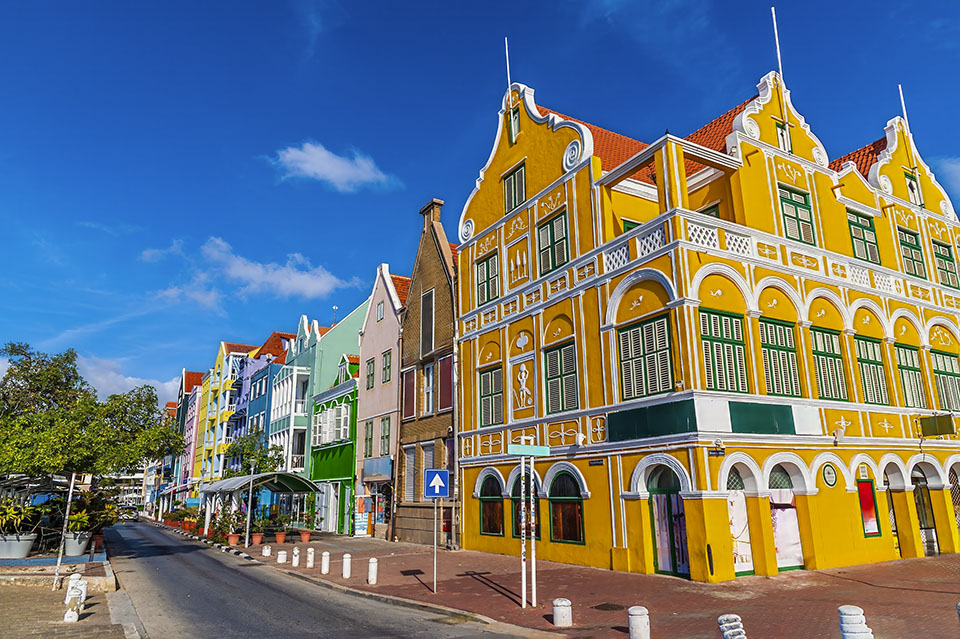
Handelskade in the Punda District of Willemstad, Curacao
Dutch History and Architecture
The “D” in ABC doesn’t officially stand for Dutch, but it might as well. All three islands were claimed by the Dutch West India Company in the 17th century and remain constituent countries or special municipalities of the Kingdom of the Netherlands today. Nowhere is that heritage more visible than in Willemstad, Curaçao’s UNESCO World Heritage-listed capital. The Handelskade waterfront is a postcard of gabled Dutch townhouses painted in vivid blues, yellows, and oranges — legend has it a 19th-century governor ordered the whitewashed buildings repainted because the glare hurt his eyes. Cross the pontoon Queen Emma Bridge, which swings open to let ships pass, and wander the narrow streets of the Punda and Otrobanda districts, where colonial facades house galleries, boutiques, and sidewalk cafés.
Aruba’s Oranjestad carries the same architectural DNA on a smaller scale, with its pastel main street and the fortified Fort Zoutman anchoring the old town. Bonaire, the quietest of the three, has fewer grand buildings but no shortage of Dutch fingerprints — from the salt pans and slave huts near the southern coast, remnants of the island’s 19th-century salt industry, to the tidy, low-key town of Kralendijk.
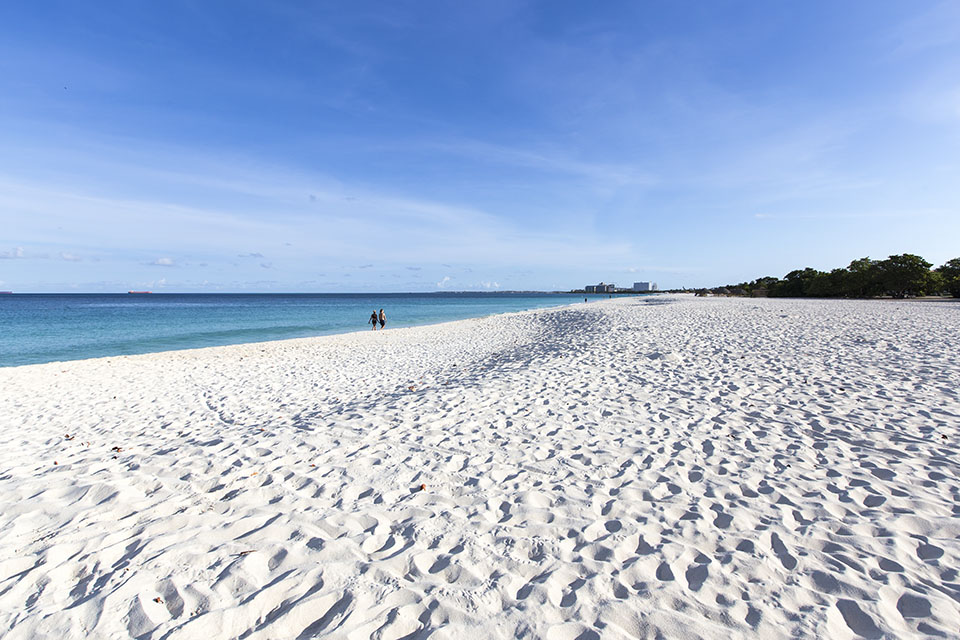
Eagle Beach, Aruba
Beaches
Each island has its own beach personality. Aruba is famous for Eagle Beach and Palm Beach, wide stretches of powder-white sand lined with resorts and the occasional windswept divi-divi tree bent permanently sideways by the trade winds — arguably the island’s most photographed natural landmark. The water here is calm, shallow, and turquoise, ideal for swimming rather than surfing.
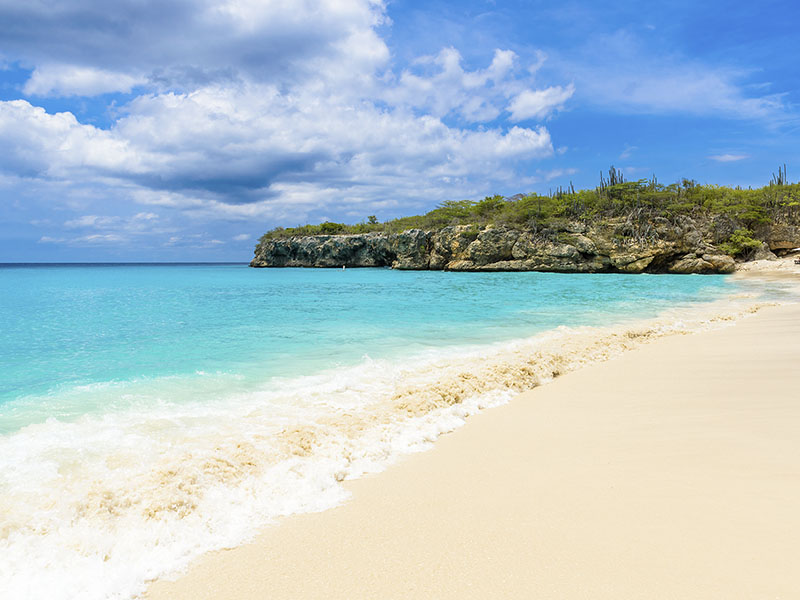
Curaçao’s coastline is rockier and more dramatic, carved into a series of secluded coves rather than one long strand. Playa Kenepa (Grote Knip) and Playa Porto Mari are standouts, with cliffs framing brilliant blue water. Many of the best beaches require a short drive or a rental car, which rewards visitors with a quieter, less crowded experience than the resort strips.
Bonaire, meanwhile, isn’t really a beach destination in the traditional sense — its coastline is narrower and rockier, punctuated by a few standout spots like Sorobon and No Name Beach on the tiny neighboring islet of Klein Bonaire. What Bonaire lacks in classic sand, it makes up for below the waterline.
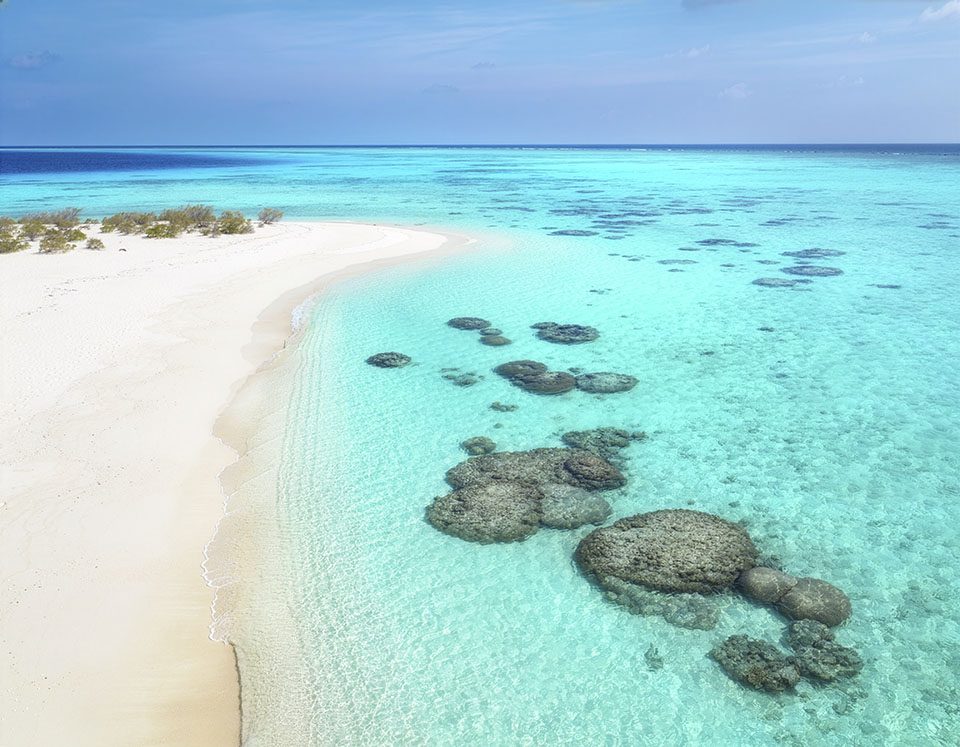
Turquoise Waters Surrounding Bonaire
Snorkeling and Diving
This is where Bonaire steals the show. The entire coastline is a protected national marine park, and the island has built its identity around shore diving — rent a truck, grab a tank, and just walk into the water at dozens of marked dive sites. Visibility regularly exceeds 100 feet, and the reefs, still remarkably healthy compared to much of the Caribbean, teem with parrotfish, eagle rays, seahorses, and coral formations close enough to reach from the shoreline.
Curaçao offers similarly excellent conditions, with sites like the Superior Producer wreck and the Mushroom Forest drawing certified divers, while calmer bays such as Playa Lagun are perfect for snorkeling straight from the beach. Aruba’s diving scene centers on wrecks — the Antilla, a scuttled German freighter, is one of the largest and most photographed wreck dives in the Caribbean, sitting in shallow enough water that snorkelers can enjoy it too.
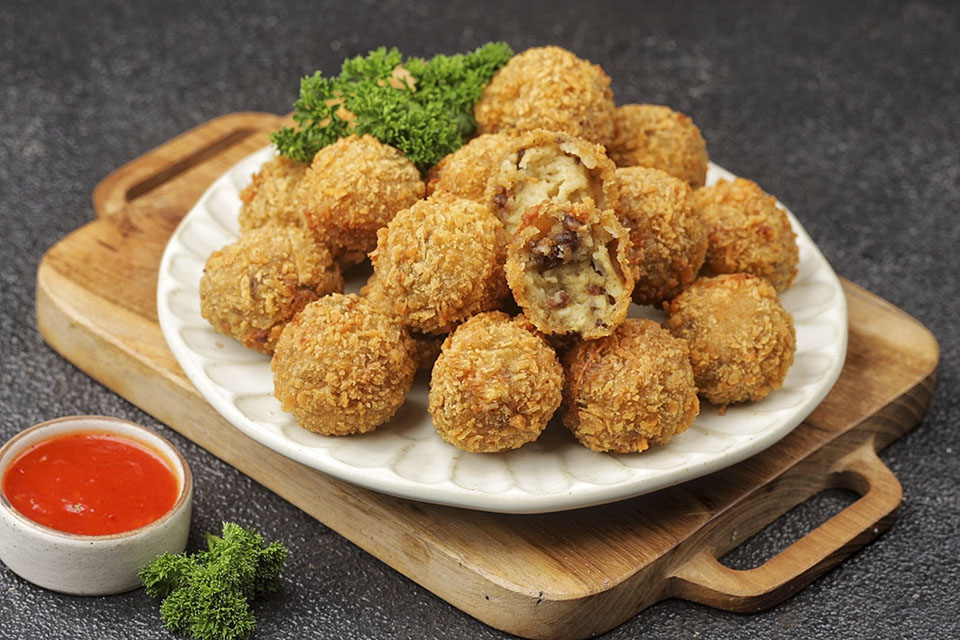
Bitterballen, a Dutch Meat-based Snack
Caribbean Culture
Despite the shared Dutch colonial thread, the ABC Islands each carry a distinct cultural rhythm shaped by African, Spanish, and Latin American influence layered over centuries of trade. All three islands speak Papiamento, a Creole language blending Portuguese, Spanish, Dutch, English, and West African tongues — a linguistic signature found nowhere else in the world and a genuine source of local pride.
Food reflects that same mix: expect keshi yena (spiced meat baked in cheese), fresh Caribbean seafood, and a strong Venezuelan and South American influence in the markets and street food stalls, alongside Dutch staples like bitterballen. Music leans on tumba and calypso rhythms, especially during Carnival season, when Curaçao and Aruba both host elaborate parades, costumes, and street parties that rival much larger Caribbean celebrations. Even a short port day offers a chance to hear Papiamento spoken on the street, browse a floating market, or catch a live band in a plaza square — a cultural texture that feels distinct from the more homogenized resort culture found elsewhere in the region.
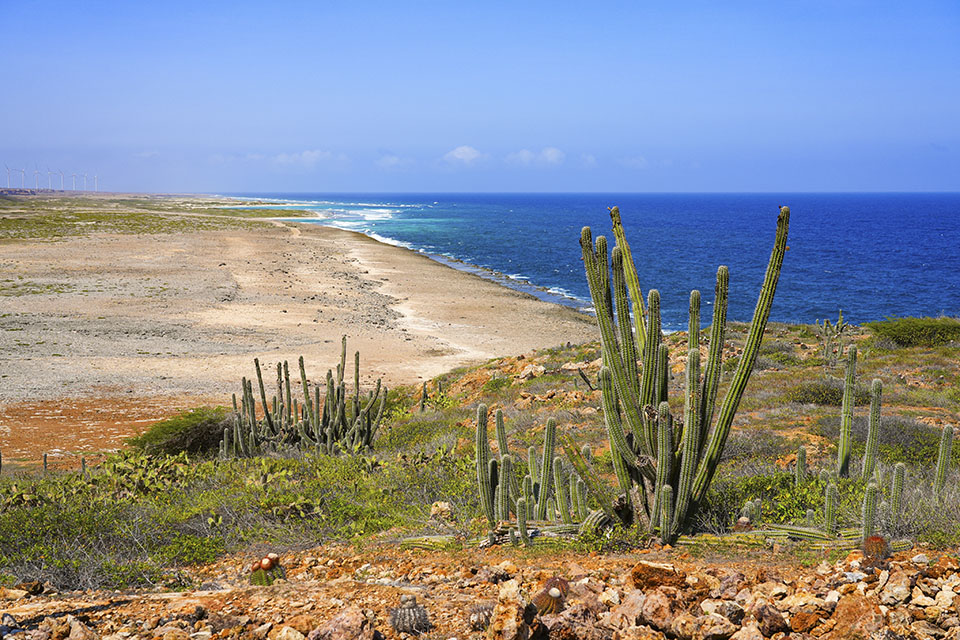
Desert Coastal Landscape of Sero Colorado in Aruba
Weather Outside the Hurricane Belt
Perhaps the most practical draw of the ABC Islands is geography. Sitting just off the coast of Venezuela, well south of the traditional Atlantic hurricane track, the islands see none of the storm anxiety that shapes cruise planning elsewhere in the Caribbean between June and November. That makes them a smart choice for a late-summer or fall cruise when other itineraries are at greater risk of rerouting.
The climate itself is dry and consistent year-round, more arid desert than lush tropical rainforest — cacti and aloe vera dot the landscape rather than dense jungle. Steady trade winds keep temperatures, which hover in the 80s Fahrenheit most of the year, from ever feeling oppressive, and rainfall is minimal even in the wetter months of October through December. For cruisers who want reliably sunny days without the seasonal roulette, the ABCs are about as safe a bet as the Caribbean offers.
If you want to sail to or from Galveston, here are your options:
Repositioning Cruise: Miami to Galveston
14 Nights on Seven Seas Splendor, November 15, 2026
Miami, Florida | Willemstad, Curacao | Oranjestad, Sint Eustatius | Kralendijk, Bonaire, Dutch Antilles | Montego Bay, Jamaica | Georgetown, Grand Cayman, Cayman Islands | Roatan Honduras | Cozumel, Mexico | Progresso, Mexico | Galveston, Texas
Search Rates
Repositioning Cruise: Galveston to Miami
14 Nights on Seven Seas Splendor, December 28, 2026
Galveston, Texas | Cozumel, Mexico | Belize City, Belize | Santo Tomas de Castilla, Guatemala | Roatan, Honduras | Montego Bay, Jamaica | Willemstad, Curacao | Oranjestad, Sint Eustatius | Kralendijk, Bonaire | Miami, Florida
Search Rates for this Sailing
Repositioning Cruise: Galveston to Fort Lauderdale
10 Nights on Symphony of the Seas, Departing August 8, 2027
Galveston, Texas | Cozumel, Mexico | Roatan, Honduras | Willemstad, Curacao | Port of Oranjestad, Aruba | Fort Lauderdale (Port Everglades), Florida
Search Rates for this Sailing
12 Nights on Carnival Breeze, January 3, 2028
Galveston, Texas | Georgetown, Grand Cayman, Cayman Islands | Port of Oranjestad, Aruba | Kralendijk, Bonaire | Curacao, Caribbean | Montego Bay, Jamaica
Search Rates for this Sailing
Hopefully, with all of the new ships heading to Galveston, more options will become available. If you can depart from Florida, Puerto Rico or Panama, you have many options to consider.
Ask an Agent: (409) 765-3555